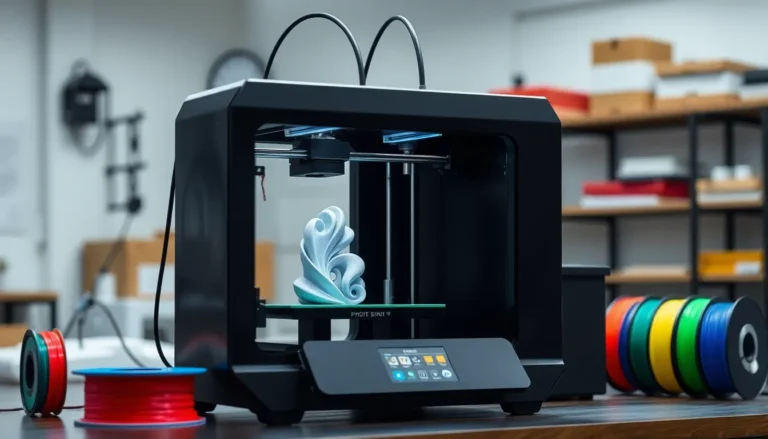
In a world where creativity meets technology, 3D printing is the golden ticket to turning ideas into cash. Imagine transforming your wildest designs into tangible products while your friends are still trying to figure out how to assemble IKEA furniture. Whether it’s crafting custom phone cases or unique home décor, the possibilities are endless—and profitable!
But wait, there’s more! With the right strategies, anyone can dive into the 3D printing business without needing a PhD in engineering. From selling personalized gifts to offering prototypes for startups, this booming industry is ripe for the picking. So grab your printer and let’s explore how to turn those plastic filaments into a thriving income stream. Who knew making money could be this fun?
Understanding 3D Printing
3D printing represents a revolutionary method of creating three-dimensional objects from digital designs. Through layer-by-layer construction, it transforms ideas into tangible products.
What Is 3D Printing?
3D printing, also known as additive manufacturing, involves producing objects by adding material. It starts with a digital model created using computer software. This industry spans various applications, including prototyping, manufacturing, and personal projects. Users can create anything, from tools to art pieces. Entrepreneurs see potential in selling custom items or developing unique designs for market needs.
The Technology Behind 3D Printing
3D printing technology encompasses several processes and materials. Fused deposition modeling (FDM) prints layers of thermoplastic filament melted and extruded from a nozzle. Stereolithography (SLA) uses ultraviolet light to cure liquid resin into solid forms. Selective laser sintering (SLS) employs lasers to fuse powdered materials, often offering greater strength. Each method suits different purposes and industries, allowing creators to choose the right technology for their projects. Understanding these technologies facilitates making informed decisions to maximize productivity and quality.
Potential Income Opportunities
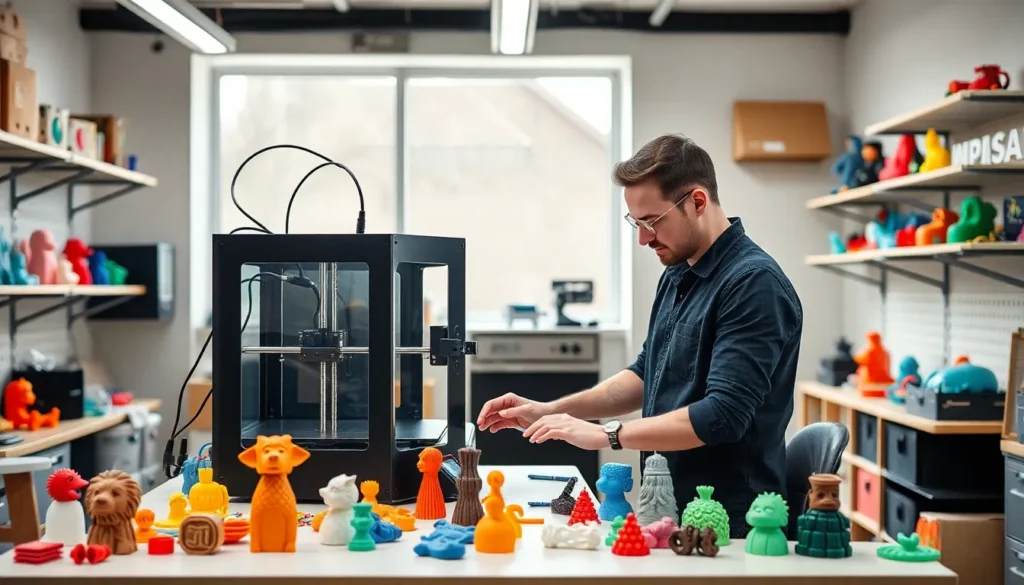
3D printing offers several lucrative avenues for generating income. Entrepreneurs can explore diverse opportunities that leverage this innovative technology.
Selling 3D Printed Products
Selling 3D printed products serves as a primary income source. Individuals can create items such as custom phone cases, jewelry, or home décor. Marketplaces like Etsy or Amazon Handmade provide platforms for showcasing these unique creations. By focusing on niche markets, sellers can attract specific audiences, enhancing profitability. Quality and uniqueness significantly impact sales potential. Thus, ensuring high standards during production remains essential.
Offering 3D Printing Services
Offering 3D printing services presents another viable option. Businesses and individuals often need prototypes or specialized components, requiring professional-grade printers. Establishing a service allows for clientele ranging from startups to established companies. Setting competitive pricing attracts customers while demonstrating expertise enhances credibility. Clients appreciate quick turnaround times, so ensuring efficiency can lead to repeat business. This approach maximizes the return on investment in equipment and materials.
Creating Custom Designs
Creating custom designs taps into the personalized market. Designers can collaborate with clients to develop unique products tailored to individual preferences. This service increases customer satisfaction and encourages word-of-mouth referrals. Promoting these personalized offerings through social media channels can expand reach. Additionally, an understanding of design software is essential, as it enables the realization of client visions. Emphasizing creativity can distinguish a designer in a competitive environment.
Market Trends and Analysis
The 3D printing market rapidly evolves, driven by increasing demand and diverse applications. Entrepreneurs are capitalizing on this growth, finding unique ways to leverage technology.
Demand for 3D Printed Products
Consumer interest in personalized items is growing. Custom products such as phone cases and jewelry attract attention for their uniqueness. Market research shows that personalized gifts are expected to reach $31 billion by 2024. Businesses offering 3D printed solutions appeal to trends in sustainability, as customers prefer eco-friendly materials. This shift toward customizability creates more opportunities, enabling entrepreneurs to target niche segments effectively.
Popular Industries Utilizing 3D Printing
Several sectors embrace 3D printing for its versatility. Manufacturing ranks high, using it for prototypes and tooling fixtures, which enhances efficiency. The healthcare industry leverages 3D printing for custom prosthetics and dental implants, showcasing its transformative potential. Architecture incorporates 3D printing for models and visualizations, allowing for greater creativity. Additionally, the automotive industry benefits from rapid prototyping, streamlining the production process. Each of these industries demonstrates the broad applicability of 3D printing technology.
Getting Started with 3D Printing
Starting a 3D printing venture involves selecting the right equipment and understanding essential components. Choosing the printer impacts both quality and capabilities in design.
Choosing the Right Printer
Market variety offers different types of 3D printers, each with unique advantages. Fused deposition modeling (FDM) printers excel in affordability and user-friendliness, suited for beginners. Stereolithography (SLA) printers provide high-resolution prints, ideal for intricate designs. Selective laser sintering (SLS) printers cater to industrial applications, producing durable parts. Assess project requirements and budget before purchasing. Exploring customer reviews can inform decisions, highlighting real-world performance. Prioritizing features such as build size, print speed, and material compatibility ensures optimal choice.
Essential Materials and Software
Material selection plays a significant role in 3D printing outcomes. Common filament types, such as PLA and ABS, are widely used for their ease of handling and affordability. For specialized applications, consider Nylon and PETG, which offer enhanced strength and flexibility. Software tools for design, like Tinkercad and Fusion 360, provide various features for creating or modifying models. Learning basic CAD skills enhances project potential, allowing for custom design creation. Familiarity with slicing software, such as Cura, streamlines the printing process, optimizing settings for specific materials. Balancing quality materials and effective software leads to successful projects.
Building a Business Model
Establishing a solid business model is vital for success in the 3D printing market. Effective strategies encompass pricing and marketing.
Pricing Strategies
Pricing strategies determine profitability and customer appeal. Researching competitors’ prices helps identify market standards, ensuring prices remain competitive. Setting a base price depends on production cost, materials, and time invested in creating products. It’s beneficial to consider value-based pricing, especially for unique or customized items that offer higher perceived value. Offering discounts for bulk orders can attract larger clients, while seasonal promotions encourage repeat purchases. Regularly analyzing financial data ensures that prices align with business goals and market trends.
Marketing Your 3D Printed Products
Marketing effectively enhances visibility and drives sales. Utilizing social media platforms like Instagram and Facebook can showcase designs, reaching a broader audience. Engaging with potential customers through targeted ads boosts brand awareness and generates interest. Building an email list aids in promoting new releases or special offers directly. Collaborating with influencers in relevant niches helps leverage their followers, expanding the reach. Participating in local craft fairs or expos introduces products to new clients, fostering personal connections. Authentic storytelling about the product’s creation cultivates customer loyalty and interest.
Embracing the world of 3D printing opens up a realm of possibilities for aspiring entrepreneurs. With creativity and the right strategies, anyone can tap into this lucrative market. Whether selling unique products or providing specialized services, the potential for profit is significant.
Staying informed about industry trends and understanding the technology behind 3D printing will pave the way for success. By focusing on quality, personalization, and effective marketing, individuals can build a thriving business that stands out in a competitive landscape. The journey into 3D printing is not just about making money; it’s about transforming ideas into reality and connecting with customers in meaningful ways.